The shoulder-scapular joint, also called the shoulder joint, due to its specific anatomical structure, is the joint with the greatest range of motion in our body, and therefore it is burdened with the greatest risk of instability. Instability is often colloquially referred to as "shoulder dislocation", "shoulder prolapse". However, it must be remembered that not every form of instability results in a complete dislocation.
Make an appointment now - with a specialist in the treatment of shoulder instability at our hospital
[title]
[image-intro]
[readmore text="Read more"]{/article}
[title]
[image-intro]
[readmore text="Read more"]{/article}
Shoulder dislocation - we divide into traumatic dislocations and volitional dislocations
(depending on our will) resulting from the individually variable increased flexibility of tissues often resulting in a generalized laxity (hypermobility) of the joints.
Traumatic shoulder dislocations are one of the "hot" topics in shoulder surgery. For years, supporters of operating the first episode of dislocation as well as supporters of rehabilitation treatment and operating only for recurrent instability have been confronting each other in many exter's forums and conferences.
When deciding on the final form of treatment, we should take into account such factors as age, sex, sports activity, results of imaging tests, chronic diseases, etc. The tendency to recurrent dislocations of young people is well documented in the literature.
(especially male), who are active in sports, especially those who suffered from the labrum (visible only in magnetic resonance) or bone damage such as an indentation fracture of the humeral head (a Hill-Sachs fracture) or a fracture of the acetabular edge during the first dislocation (Bankart bone damage). Older people, characterized by greater joint integrity, are less prone to recurrent dislocations if the bone damage described above did not occur at the first trauma.
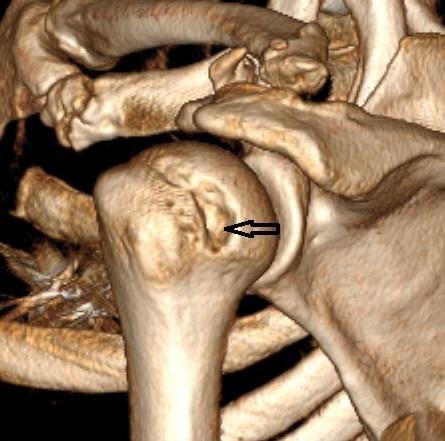
Computed tomography reconstruction image showing a massive indentation fracture of the humeral head after dislocation
(Hill-Sachs fracture)
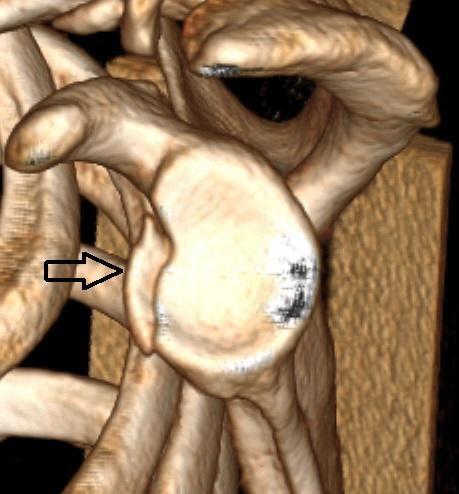
Massive fracture of the acetabulum after dislocation
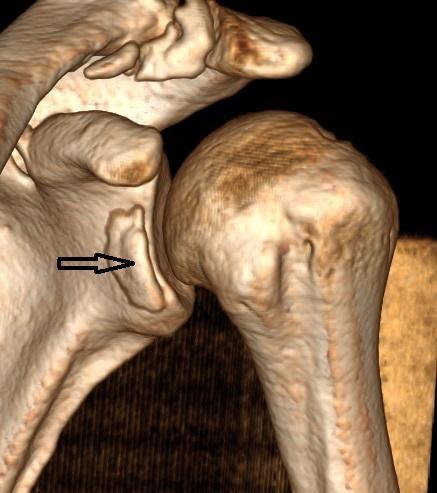
Front view of the acetabular fracture after dislocation
The author of the text: lek.med. Hubert Laprus