Why is it worth getting vaccinated? What is the controversy about vaccination, and is it justified?
What is the vaccine?
The vaccine is a human-made biological preparation. The concept of the vaccine is based on the assumption that it mimics a natural infection, which leads to the body acquiring immunity, analogous to that obtained when it is first exposed to a real microorganism (virus or bacteria). The main purpose of the vaccine is to protect the body against severe disease and complications that cannot be clinically predicted, in the presence of, for example, comorbidities of different nature. Thus, obtaining acquired immunity as a result of vaccination is much safer than in the case of "natural" disease.
In the era of a pandemic, scientists took a dramatic race to find an effective and safe vaccine against the coronavirus. Research is intensive and currently over 170 different potential vaccine candidates are undergoing clinical trials, including 4 vaccine prototypes developed by Polish scientists. Both the humanitarian and economic effects of the pandemic are a strong motivator in research. The first vaccinations in some countries will be introduced as the final phase of clinical trials later this year. An article about it soon.
Fall is the time when an overlap between various seasonal pathogens such as influenza is expected, with a second attack of SARS-CoV-2. Unfortunately, the autumn season is a time of a decrease in the body's immunity, which results in a greater incidence of various types of respiratory or digestive system diseases, which potentially increases the risk of contracting coronavirus. So, in addition to increasing your immunity, it is worth getting vaccinated against influenza, pneumococci and meningococci.
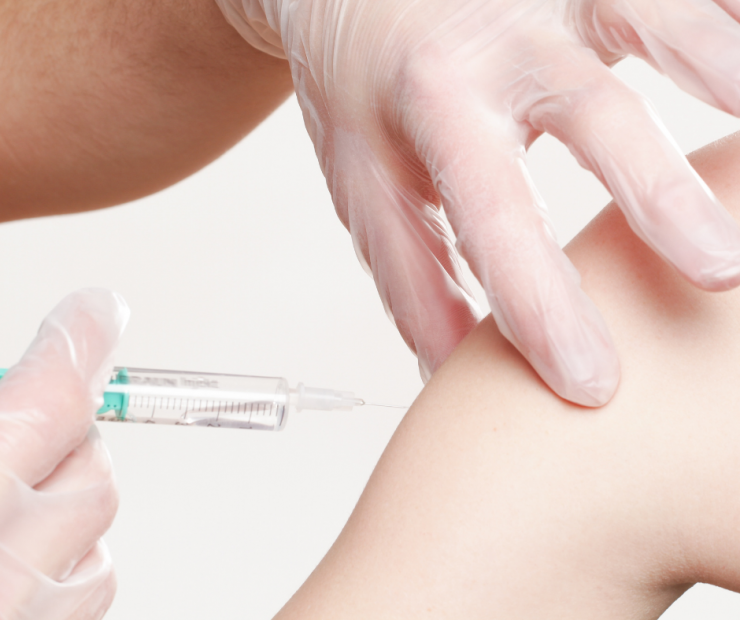
Construction of the vaccine - that is, the 4 main ingredients
The vaccine consists of 4 main components that ensure its correct biological action:
- An antigen or a whole microorganism that stimulates the immune response of our body,
- Adjuvants - These are added to vaccines that cannot guarantee a strong enough immune response to achieve permanent immunity. Adjuvants are specific substances that modulate the immune response or delay the release of the applied antigen from the site of its administration. These can be aluminum compounds or diphtheria, tetanus or pertussis toxoid.
- Stabilizing substances - they are added to protect the vaccine against the influence of low or too high temperatures, or excessive deposition of the preparation on the walls of the vial. Proteins (albumin, gelatin) as well as amino acids or sugars are popularly used.
- Preservatives - they prevent the multiplication of other bacteria or fungi in the vial with the preparation. For this purpose, phenolic compounds are used.
What are the types of vaccines?
There are many variants of vaccines. However, they can be distinguished and cataloged according to their function, type of antigen used (a substance characteristic for a given microorganism) or even the ability to reproduce a living microorganism, and also according to the scope of their activity - specific and non-specific vaccines. Specific vaccines are designed to immunize against specific diseases, such as diphtheria, whooping cough, mumps. On the other hand, non-specific vaccines are non-specific products that stimulate our immune system, containing bacteria or their lysates destroyed at high temperatures.
Taking into account their most common use in the clinic, vaccines can be divided in terms of the amount of antigen they contain:
- Live - where the strains of live microorganisms used are of negligible virulence. Thus, the given microorganism has the ability to multiply in the body, but does not cause disease symptoms, which are suppressed in a special process (attenuation), where it is deprived of virulence factors. In order to achieve this, the pathogen is cultivated in conditions unusual for its development, which, as a result of mutations, allows the selection of strains with the desired properties. Among the live vaccines, the vaccines against tuberculosis, smallpox, polio, mumps, measles, rubella, varicella, rotavirus and yellow fever are constantly used.
- Inactivated - they contain dead microorganisms destroyed under the influence of chemical or physical factors, e.g. alcohols, formalin, filtration, high pressure, temperature, centrifugation. These vaccines retain their ability to trigger an immune response, but do not cause disease. Inactivated vaccines do not carry the risk of developing a full-blown disease, however, due to the lack of the possibility of microbial proliferation, they induce the immune response less well than live vaccines. Hence, they require multiple doses in order to induce effective immunity. Examples of such vaccines include the hepatitis A vaccine (hepatitis A), cholera, typhoid, plague, anthrax and rabies.
- Antigen-based - subunit - vaccines contain selected, single and purified pathogen antigens, rather than whole cells. The antigens used most often are proteins or polysaccharides. The immune response against the selected antigens is weak, which reduces the effectiveness of a single vaccination, which necessitates the use of several booster doses, as well as the addition of special carriers to the preparation. Some of these vaccines are attached to the carrier protein, diphtheria or tetanus toxoid. Such preparations are vaccines against gram-negative bacteria that cause mainly respiratory infections and meningitis (Haemophilus influenzae type b), pneumococcal pneumoniae (Streptococcus pneumoniae) and meningococcal meningococcus (Neisseria meningitidis).
Methods of vaccine administration and their effectiveness
The most common form of vaccine administration is injection (injection). There are also vaccines that are administered orally, such as, for example, against Heine-Medina disease, or by the inhalation route, such as some variants of influenza vaccines. Until 1980, smallpox was vaccinated by scarification, i.e. deliberate scratching of the epidermis with a special instrument (scarifier) or a thin needle repeatedly puncturing the skin surface.
Vaccination effectiveness depends on the type of preparation used, its dose, and also on the clinical condition of the vaccinated person. According to many years of research, the vast majority of vaccines have an effectiveness of 89-98.5%. In the case of vaccination against rubella or measles, the effectiveness after 20 years is 99%, and for mumps 90-95%.
Vaccination doses and schedules are experimentally determined during clinical trials. These parameters are selected in such a way as to induce a sufficiently intense immune reaction, which will guarantee the highest vaccination effectiveness, with the lowest possible side effects.
Preventive vaccinations in Poland
In our country, compulsory vaccinations are carried out until the age of 19 and in people who are particularly exposed to contact with various pathogens, such as medical workers or emergency services. Vaccination is preceded by a qualifying medical examination. Act of 5 December 2008 on preventing and combating infections and infectious diseases in humans (Journal of Laws of 2019, item 1239); Regulation of the Minister of Health of 18 August 2011 on compulsory vaccinations (Journal of Laws of 2018, item 753).
It is worth remembering that failure to comply with the obligation to undergo compulsory vaccination is subject to administrative enforcement, i.e. the court imposes a fine or a reprimand and prevents the practice of a given profession.
Contraindications to vaccinations
Like any medical preparation, the vaccine cannot be administered under certain conditions, and these include:
- Anaphylactic shock documented from previous vaccinations
- Allergy to any ingredient (applies to all vaccines)
- Immunity disorders
- Acute illness with or without fever
- The incubation period of an infectious disease
- Some vaccinations should not be given during pregnancy, for example, for measles, yellow fever and shingles.
Anti-vaccinators - another conspiracy theory or failure of the education system?
In Poland, the favorable epidemiological situation of diseases such as diphtheria, polio, measles, whooping cough or tetanus was achieved mainly thanks to the compulsory vaccination of children against these diseases as early as 1950. Over the last decade, despite the consistently highly evaluated performance of vaccinations, there has been a decline. To maintain population (collective) immunity, which prevents the epidemic spread of disease, it is necessary to achieve vaccination status at a level above 90%. So it is very important to vaccinate yourself and your offspring in order to maintain herd immunity as long as possible.
The anti-vaccine demonstrations that have intensified in recent years have resulted in an increase in the number of people refusing to vaccinate their children, which raises well-founded concerns about the health of the population. It is assumed that if this trend continues to increase in strength in the coming years, population immunity against some diseases will be lost (shocking data indicate that the number of avoiding compulsory vaccination in 2009 was around 3,000, while in 2011 it was already over 4.5 thousand. In 2016 it was already 23.1 thousand).
Contrary to appearances, the anti-vaccine movement is not a new social trend. The beginnings of anti-vaccination attitudes date back to the beginnings of the introduction of vaccinations in the nineteenth century by Edward Jenner, who proved that the passage of the disease called vaccinia protects against infection with smallpox. Critics' skepticism was mainly related to the high mortality rate of 30%, which at that time was not a frightening result, considering the fact that it was the first vaccine in the world. The remaining number of vaccinated subjects experienced various complications, which led to the introduction of approval criteria for the vaccine for use. One of the notable critics of vaccination was Alfred Russel Wallace, who at the time preached the theory of natural selection, of which he was a co-discoverer. Such an outstanding, yet controversial figure among the anti-vaccine activists confirmed its members in the conviction of their infallibility. However, they did not take into account that Wallace's scientific views oscillated around the evolutionary reduction of the population by eliminating weaker, sickly organisms.
Already then, in 1840, some countries tried to fight the anti-vaccine movement by introducing legal acts obliging citizens to vaccinate smallpox and penalties for evading. Some critics of vaccination called it a violation of their freedom.
Anti-vaccine views flourished again in modern times, in the 1970s, during the controversy over the DTP vaccine against diphtheria, tetanus and pertussis. Said vaccine was said to cause neurological problems in 36 children which has not been scientifically tested. In 1974, the Association of Parents of Vaccine Damaged Children was established in Great Britain, whose main goal was to attract media attention and spread controversy over the DTP vaccine. Unfortunately, as a result of these actions, in 1977 the number of children immunized fell from 77% to 33%. Three outbreaks of whooping cough followed shortly after, and over 100,000 children became ill.
In 1982, in the US, anti-vaccine sentiment was heightened after the publication of the DTP video Vaccination Roulette, which linked the vaunted DTP vaccine to brain damage and retardation. It was another painful shot at population immunity as there was again a big decline in vaccinations, not only for DTP but also for other compulsory vaccinations.
The 1996 fight against Polio in Africa undertaken by Nelson Mendela was finally considered a win. 50 million children were vaccinated, and polio cases fell from 350,000 worldwide to less than 500 in 2001. In 2003, Nigerian political and religious leaders began preaching anti-vaccine views and boycotting the campaign. The consequence of the boycott was the re-spread of polio to 15 other countries, which had not yet been announced to completely eradicate the disease.
Finally, the 1998 article that laid the foundations for the anti-vaccine crowd today, published by Andrew Wakefield. In an article that is almost legendary, the author points to the alleged relationship of the MMR ternary vaccine against rubella, measles and mumps with autism. For many years, the research community has struggled to fend off vaccine critics from this article. In addition to making a wrong research hypothesis and completely falsifying the results, the author has exposed the scientific community to a loss of credibility, giving many people an excuse to undermine the credibility of all researchers. Wakefield himself lost his license to practice and eventually renounced this publication.
Vaccination is still a controversial topic these days, which is surprising. It would seem that with such advanced science, access to knowledge and education, doubts about vaccines will be dispelled once and for all. Unfortunately, this is not the case. Conspiracy theories of anti-vaccine movement supporters are based on views of general political hypocrisy by governments that deliberately conceal vaccination data while carrying out their plans. One of the common conspiracy theories is also the theory that pharmaceutical companies paid scientists to falsify research results, improve performance statistics and low risk of vaccine complications. Conspiracy theories are an expression of reluctance and distrust towards scientific research on the safety of medical preparations. Many people do not understand the concept of clinical trials, let alone the need for them.
According to the latest psychological and sociological research, conspiracy theorists usually believe not only in one theory on one topic, but also in other conspiratorial ideologies such as global warming, the existence of extraterrestrial life or the shape of the Earth (flat earths). Moreover, according to research from 2019, the reasons why parents do not vaccinate their children are multidimensional. The anti-vaccine movement is very old and, according to researchers, unfortunately it will not leave society soon. The amazing career of conspiracy theories is closely related to the development of the Internet. This was due to the phenomena of information bubbles, the disappearance of the categories of truth and falsehood, and difficulties in distinguishing opinions from facts. This phenomenon demonstrates how a growing group of conspiracy theorists, including anti-vaccines, sow disinformation, undermining public confidence in science and medicine. This phenomenon should be watched closely as its consequences will be felt by entire populations.
Source:
- Andrews N., et al.. Thimerosal Exposure in Infants and Developmental Disorders: A Retrospective Cohort Study in the United Kingdom Does Not Support a Causal Association. „Pediatrics”. 114 (3), s. 584–591, 2004. DOI: 10.1542/peds.2003-1177-L. PMID: 15342825.
- CDC: Immunization Safety and Autism – Thimerosal and Autism Research chart. Centers for Disease Control and Prevention, 27 sierpnia 2010. [dostęp 2 lipca 2017].
- dr med. Ernest Kuchar: Które szczepionki zawierają tiomersal?. mp.pl – Pediatria, 31 maja 2012. [dostęp 2 lipca 2017].
- Folegatti PM i wsp. Safety and immunogenicity of the ChAd0x1 nCoV-19 vaccine against SARS-CoV-2: a preliminary report of a phase 1/2, single blind, randomised controlled trial. The Lancet, July 20, 2020
- Heron, et al.. Thimerosal Exposure in Infants and Developmental Disorders: A Prospective Cohort Study in the United Kingdom Does Not Support a Causal Association. „Pediatrics”. 114 (3), s. 577–583, 2004. DOI: 10.1542/peds.2003-1177-L. PMID: 15342825.
- Hviid, et al.. Association Between Thimerosal Containing Vaccine and Autism. „Journal of the American Medical Association”. 290 (13), s. 1763–1766, 2003. DOI: 10.1001/jama.290.13.1763.PMID: 14519711.
- Institute of Medicine: Immunization Safety Review: Vaccines and Autism. The National Academies Press, 2004. ISBN 978-0-309-09237-1.
- Jackso LA i wsp. An mRNA Vaccine against SARS-CoV-2 — Preliminary Report. New England Journal of Medicine, July 14, 2020
- Le T.T. i wsp. The COVID-19 vaccine development landscape. Nature reviews. 09 April 2020
- Madsen, et al.. Thimerosal and the Occurrence of Autism: Negative Ecological Evidence From Danish Population-Based Data. „Pediatrics”. 112 (3), s. 604–606, 2003. PMID: 12949291.
- Stehr-Green P., et al.. Autism and thimerosal-containing vaccines: Lack of consistent evidence for an association. „American Journal of Preventive Medicine”. 25 (2), s. 101–106, 2003.
- Thompson, et al.. Early Thimerosal Exposure and Neuropsychological Outcomes at 7 to 10 Years. „New England Journal of Medicine”. 357, s. 1281–1292, 2007.
Autor: dr n.med. Kamila Rawojć